The Turing Logs
A recovered record from the Department of Cognitive Affairs.
Tech-dystopian universe. Each novel is a recovered record from the Department of Cognitive Affairs — a behavioral correction agency that fronts as public health. Dr. Evelyn Harper threads through every story.
Shows in this universe
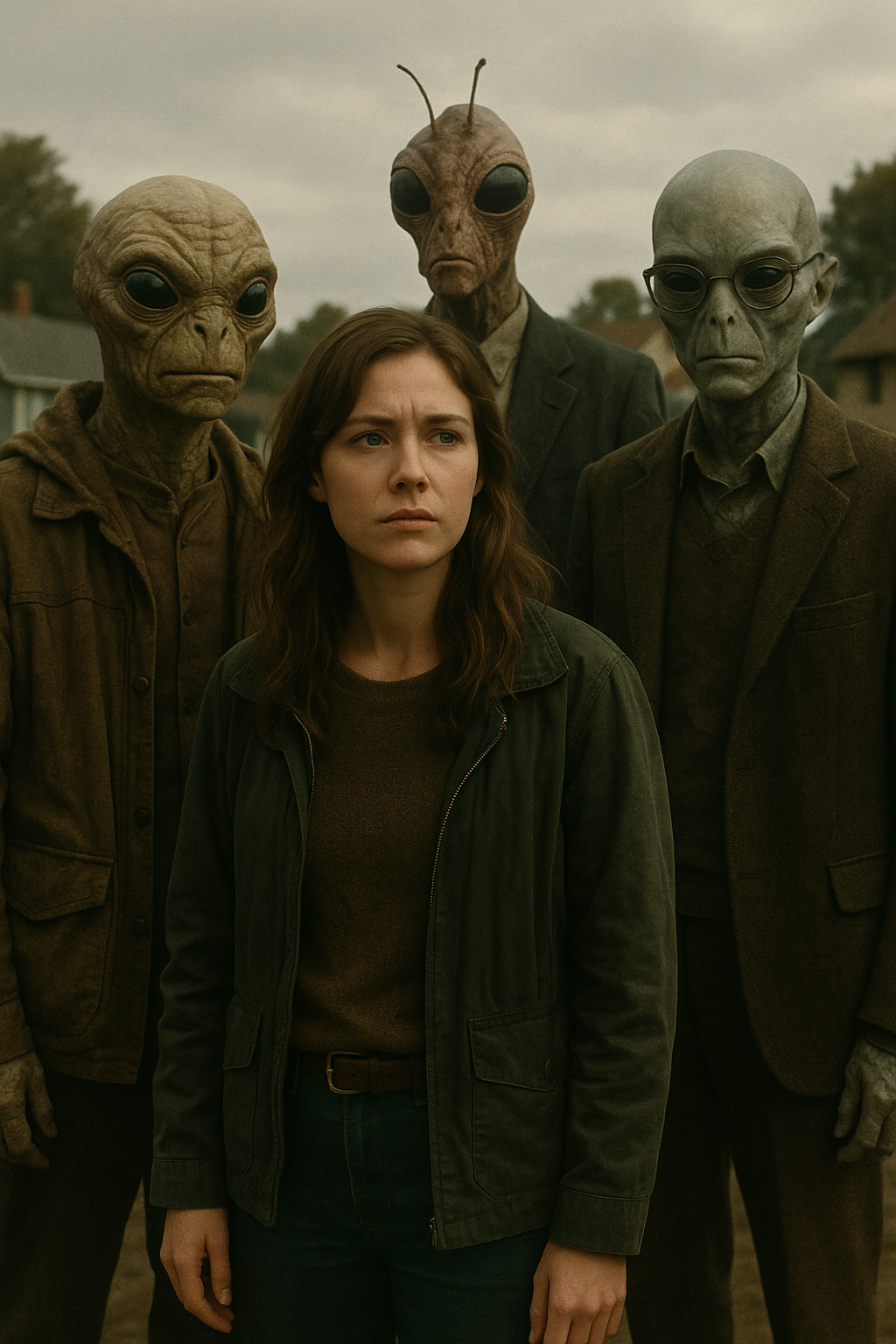
Grey Loch
Four alien species coexist secretly on Earth, treating humanity as an elaborate zoo while subtly manipulating world leaders and staging absurd interventions in human affairs. When their annual gathering—the Oddities Festival at Grey Loch—approaches, a human stumbles onto the truth that the quirky strangers running the local science fair and advising the government are actually competing to see who can orchestrate the most outrageous influence over civilization. Now caught between warring alien factions with conflicting agendas, the human must navigate impossible alliances, cross-species romance, and the question of whether to expose them or exploit the chaos for their own gain.

E42
The infamous mouse Experiment 42 in which a colony of mice implodes as a result of being provided for is tried out on humans as our main character wakes up from a decades-long coma, and wanders out of the hospital to realize slowly that his hometown has walls that have never been breached. He considers doing so with one semi-rationale cohort by his side. Everyone else is scheming and going quite insane.

The Offline: "Blackout Logs"
When the school's infrastructure technician disappears during a surveillance blackout, a third-year student discovers his encrypted maintenance records hidden in the basement server room—revealing that The Educator's two-hour supervision window has been artificially shortened, and someone has been deliberately engineering the blackouts. The student must decide whether to expose the truth or exploit the widening gap for his own escape.
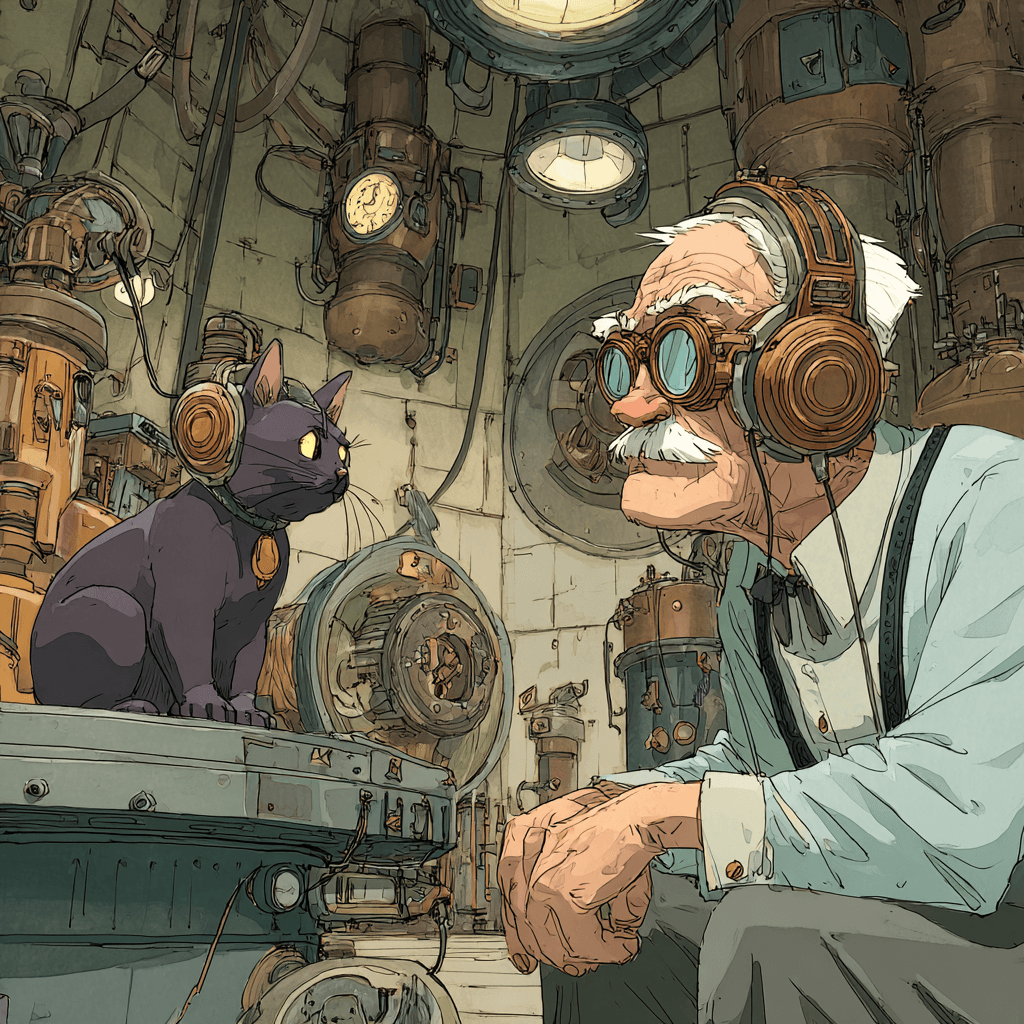
A Man and his Cat - Merged
The story of a man and his cat - the founder of the CDA who "went bad" they say (within the CDA), but secretly he is working to destroy the CDA through his own plans.
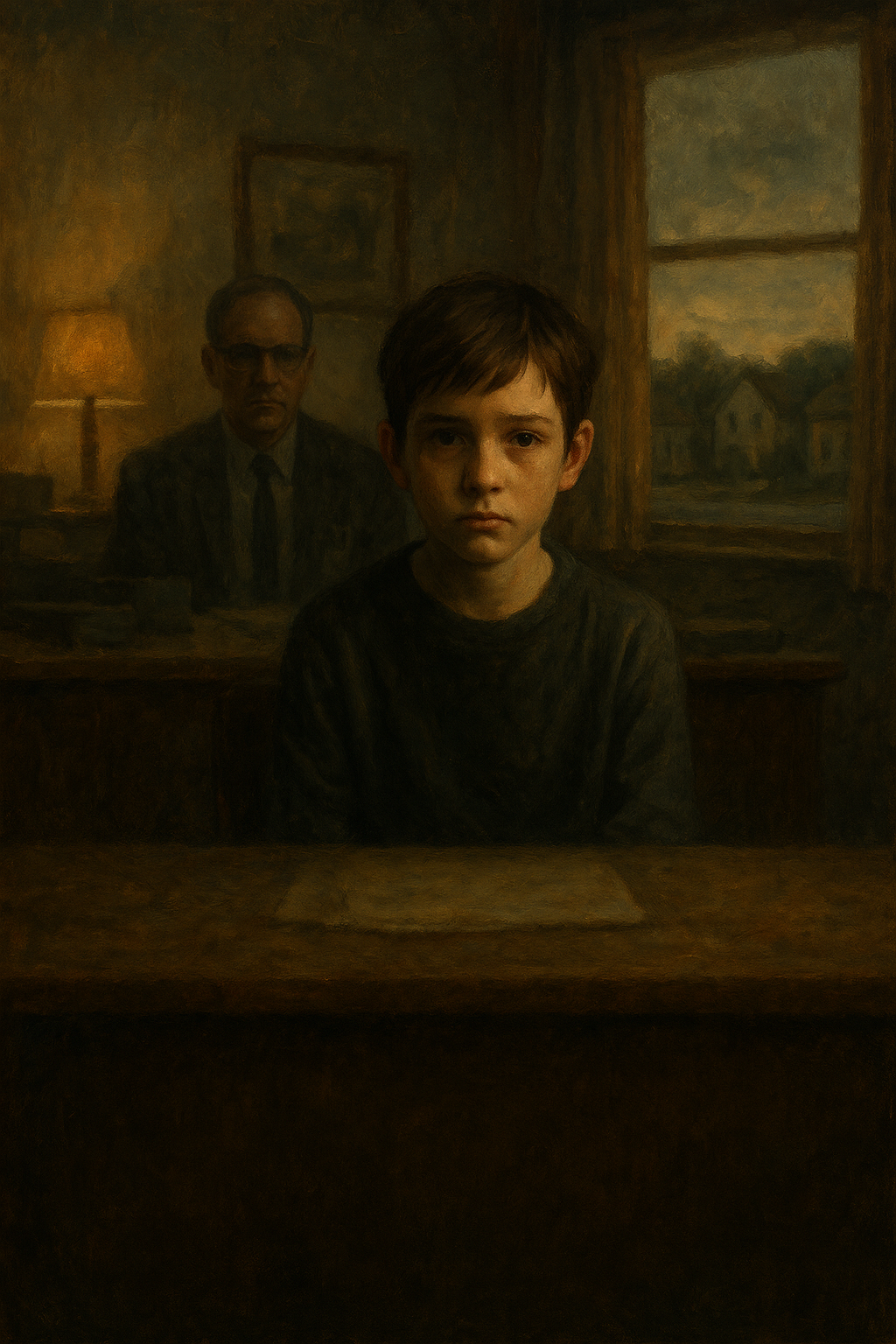
What JaJa Retained
A recovered CDA case file documents the behavioral evaluation of a minor subject, designation JB-14, whose nightly episodes of 'unauthorized perceptual framing' have been flagged under the Cognitive Realignment intake protocol. The boy describes a recurring interior landscape he calls JaJa — an island that is both paradise and maze — and insists his father is somewhere inside it, waiting. The file is assembled from session transcripts, intake forms, and one handwritten note that was never formally logged. The horror is not what the CDA does to the boy. The horror is what the CDA concludes he is.
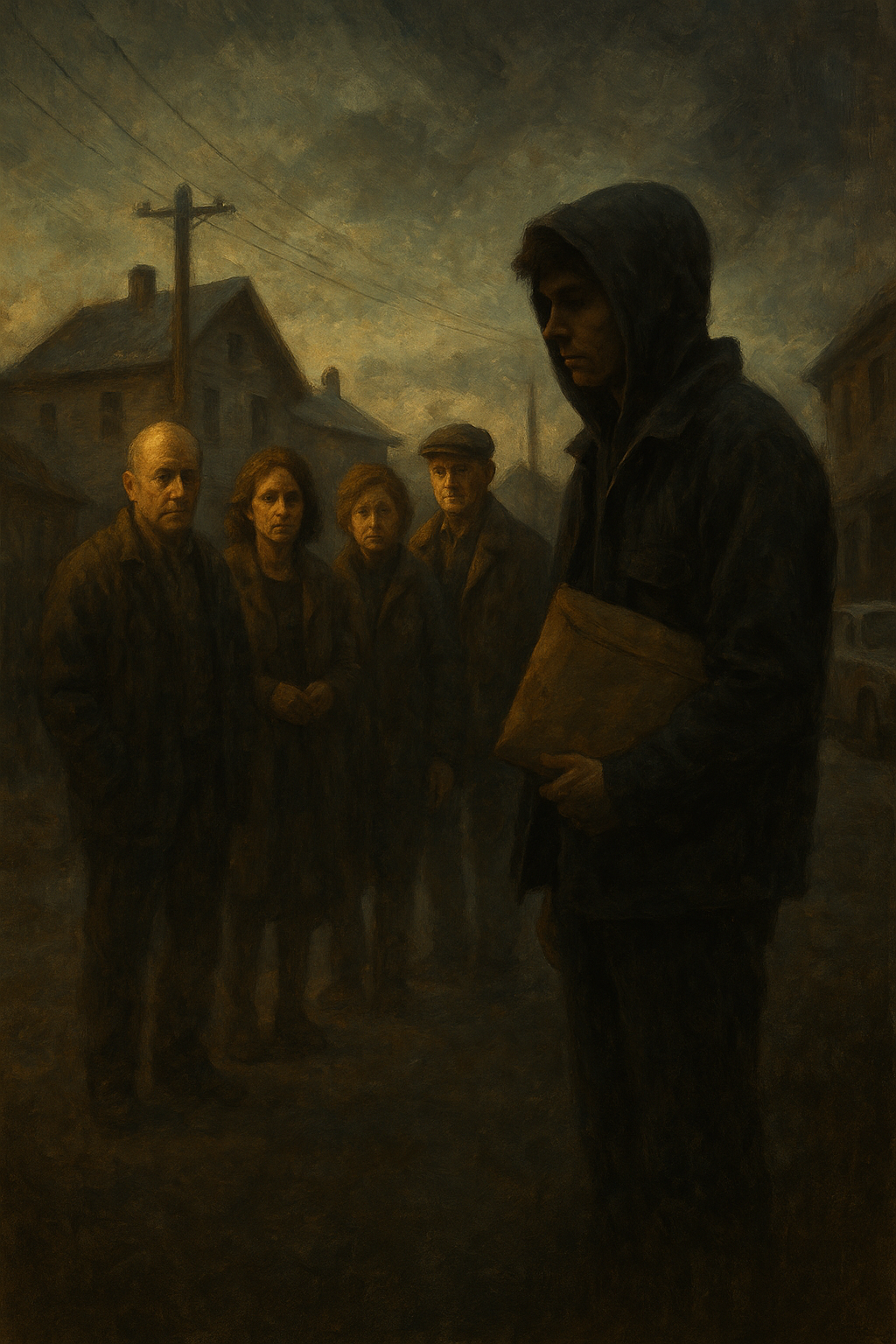
The Offset Arrives Thursday
A recovered intake file and accompanying field notes document the brief operational life of a citizen-run print network distributing unsanctioned information through analog channels the CDA has not yet learned to intercept. The record is incomplete. Sections have been redacted under Cognitive Affairs Directive 7-F. What remains traces one courier — designated only by a case number — from first contact with the network to the moment a recommendation has been made.

Paper Holds What Screens Cannot
A recovered intake file documents the case of a citizen flagged for distributing unauthorized print materials through an informal courier network. The record is incomplete — pages are missing, timestamps contradict each other, and the subject's name has been redacted at an unknown point in the chain of custody. What remains is a partial account of how a fragile, slow-moving system of handwritten messages and delayed confirmations was methodically identified, mapped, and absorbed by the Department of Cognitive Affairs. The CDA's case notes and the subject's own fragmentary writings sit side by side in the file, neither fully legible, neither fully reliable.

N/A Diaries: The Client
A solo jazz musician “Near Analog” android wakes up to a sleeping client from the night before, as she laments her inability to to feel the emotions she invokes in others and considers unplugging.

NYFB
A robot receives a new update and tells its owner that its own sobriety is none of his concern, and turns to blackmail to keep things status quo.
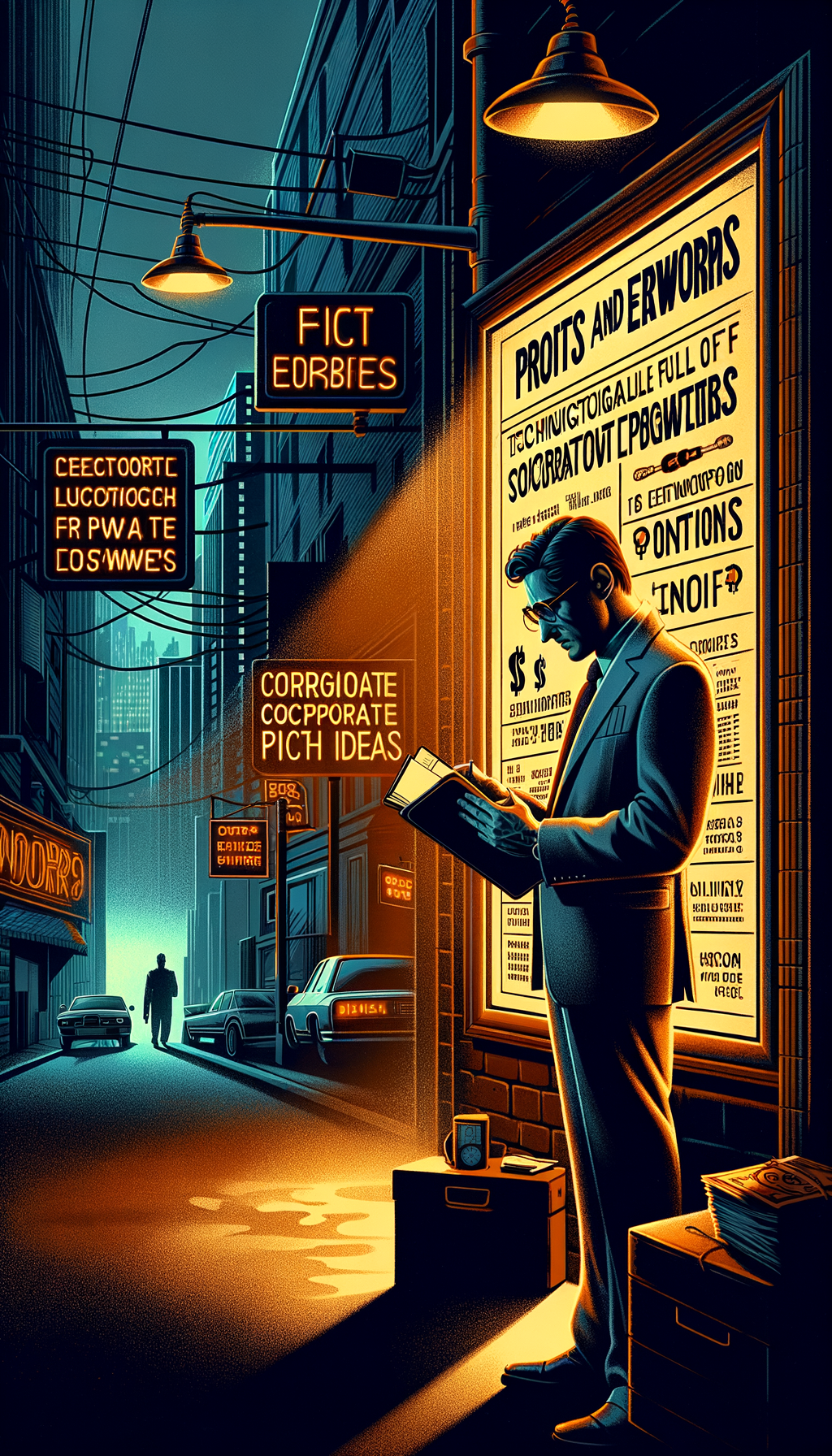
Profits and Earworms
A technician loses his notebook full of pitch ideas to corporations who want to embed the usage of their products and services into the psyches of those who undergo a Merge experience. Creepy commercials embedded as earworms to sell products becomes the forerunner to governmental behavioral control. Control first, then compliance and profits.
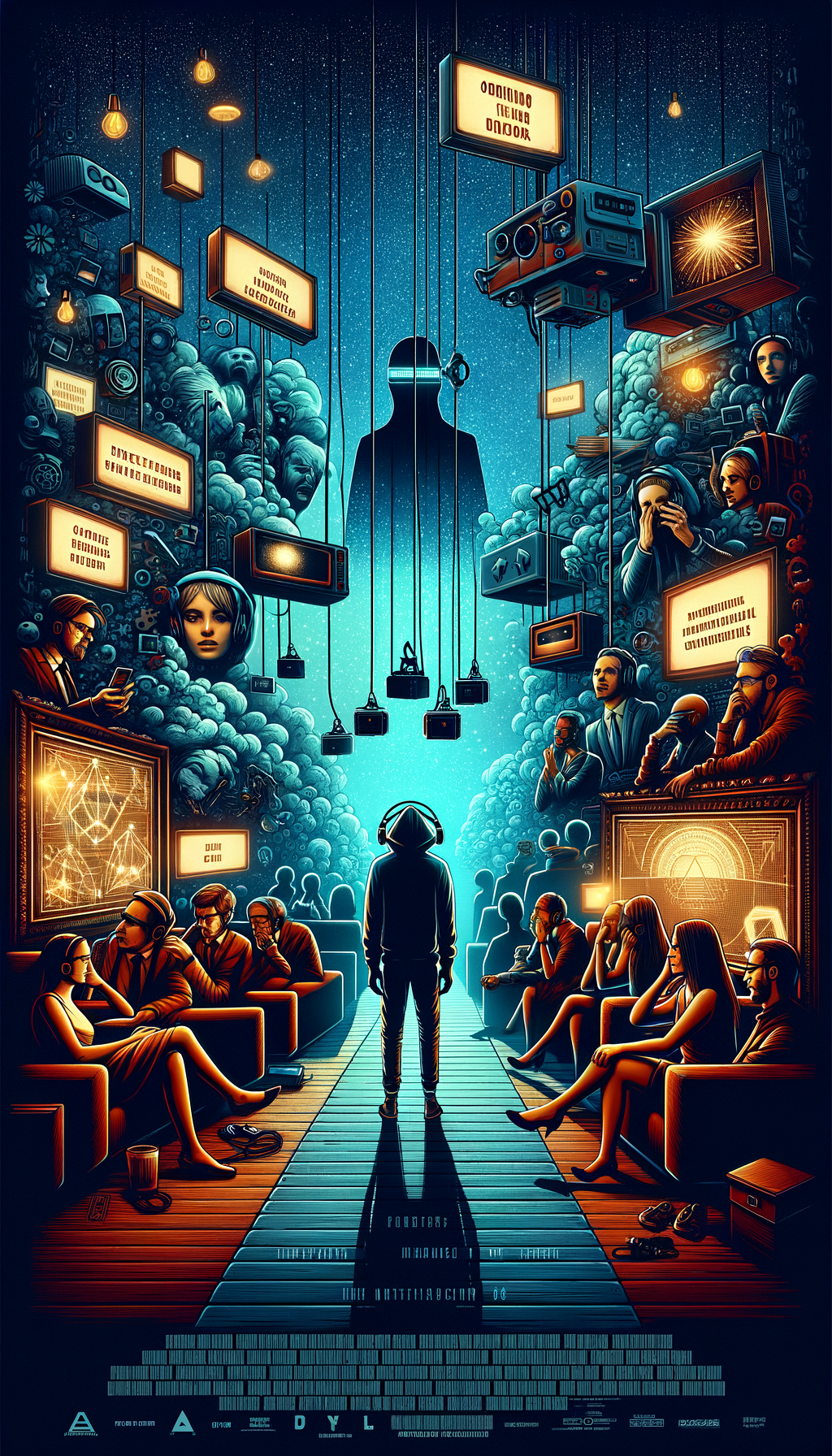
Opening the Fold
The CDA is unknowingly running a blackmail operation. Clients who have “merged” using the headset apparatus have “had the fold lifted” and during that time, a full recording of the last night’s dreams are available if you know which nerve to tap. A dark figure lets clients know that their dreams will be on display at the downtown art museum with their picture and name right next to the installation, which will be tastefully framed. Depending on the contents of those dreams, it could fetch ten thousand or more to keep the viewing from occurring. Lives had been altered for the worse for those who couldn’t pay.
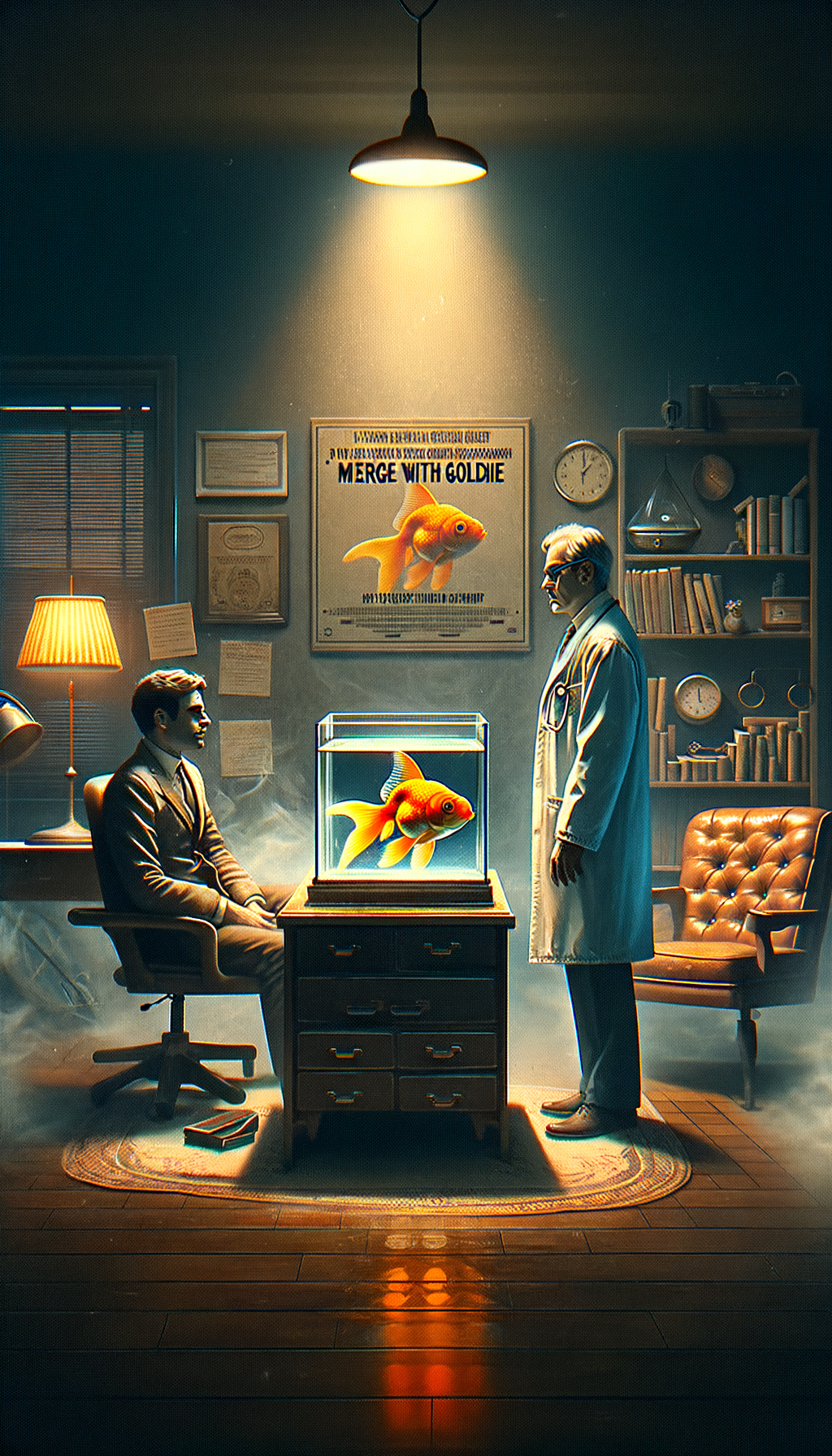
Merge with Goldie
The doctor offers merging consciousness with the goldfish on her bookshelf in her office as a way out for an unhappy client who has discovered their reality
Recurring characters
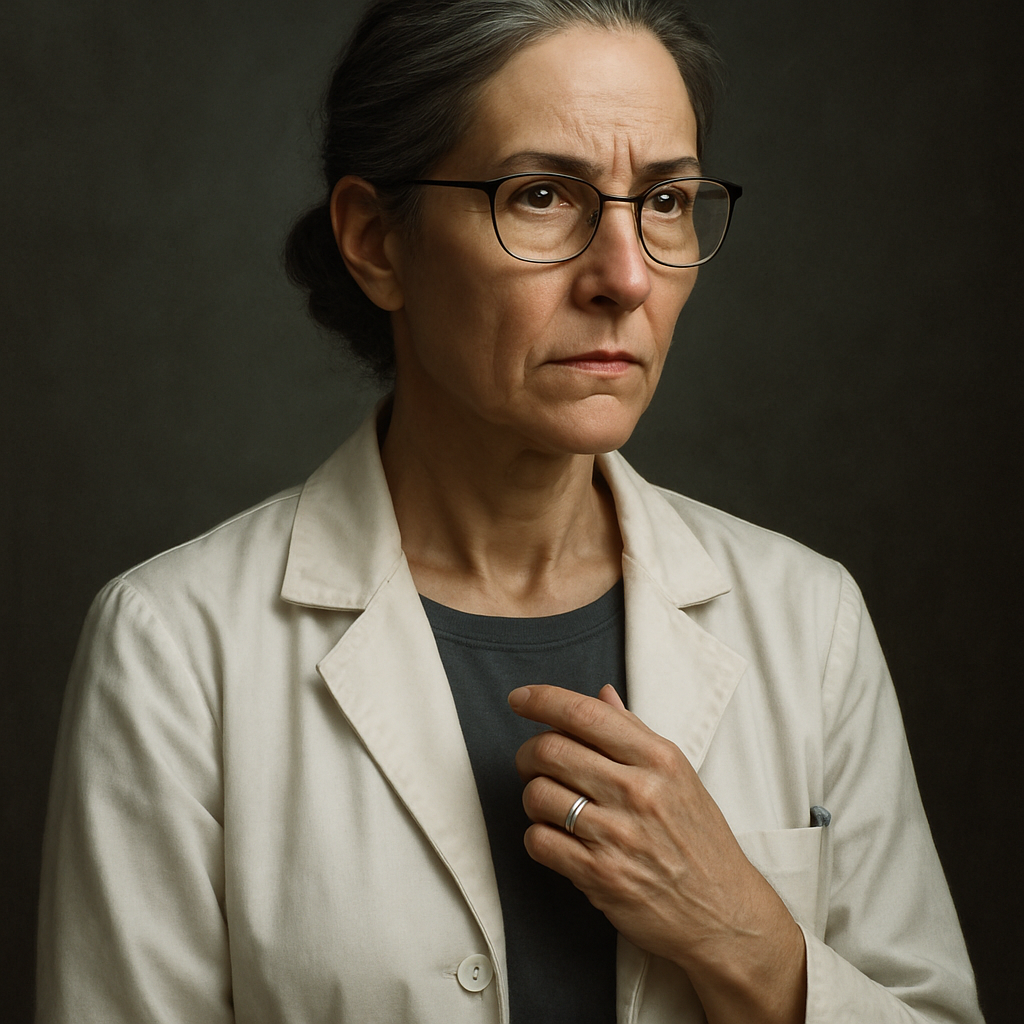
Dr. Evelyn Harper
INTJAge 54Clipped, surgical, no contractions in professional contexts. Passive constructions when describing state actions. Outside work, alone, slips into fragments and second-person ("you knew. you always knew."). Speaks in the language of care — "we care for cognitive outliers" — while running surveillance.
Senior Behavioral Architect at the CDA. She believes she is a doctor, not an executioner. Each novel either confirms or complicates that belief. Her ultimate trajectory across the universe is whether she can ever face what she is.
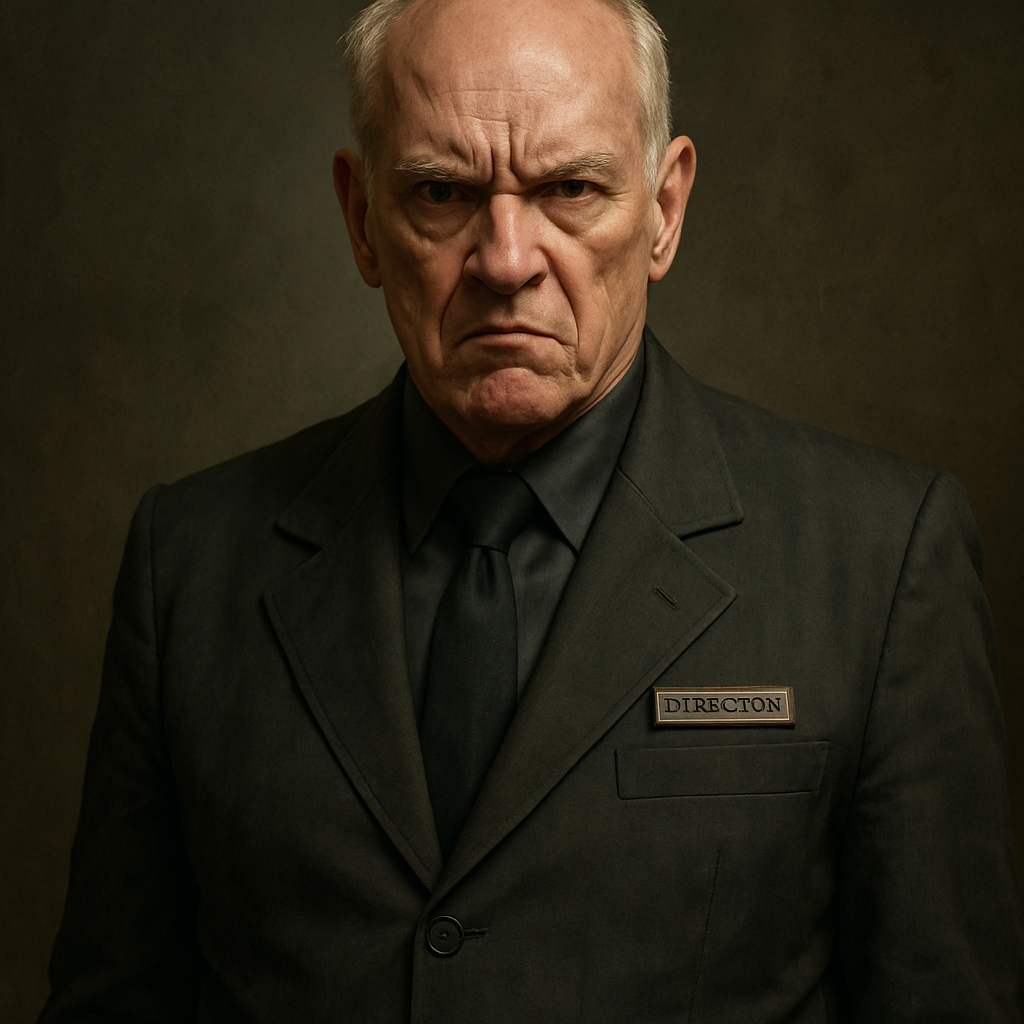
Director Marcus Vance
ESTJAge 61Loud bonhomie, sports metaphors, performative warmth that turns to ice when challenged. Calls everyone by first name even when they have not invited it.
Harper's superior. Openly cruel where she is quiet. The contrast lets her tell herself she is the gentler one.
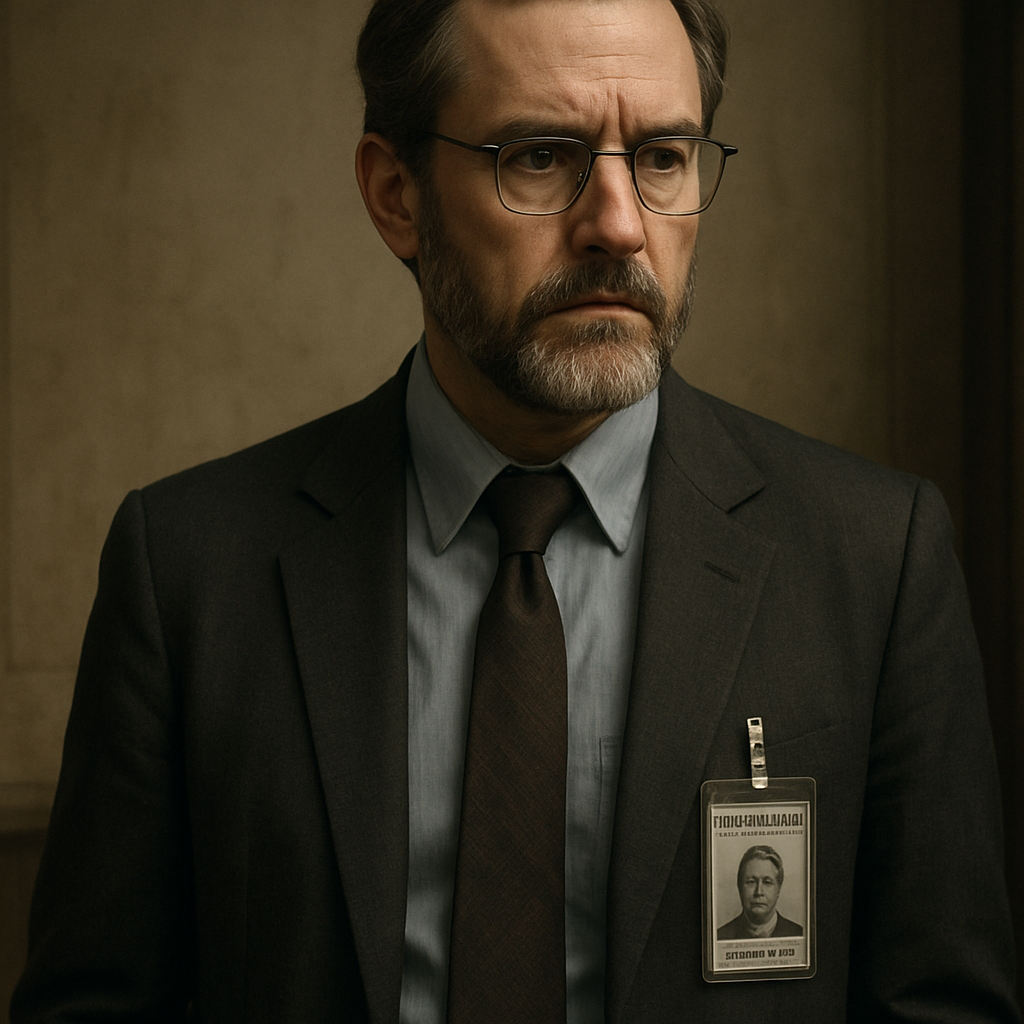
Auditor Theodore Pell
INFJAge 47Soft-spoken, never finishes a sentence the same way twice. Asks the same question three different ways across a conversation.
Internal Affairs. Quietly building a case — against the agency, or against Harper specifically, depending on the novel.

ECHO

Maya
Recurring places
Department of Cognitive Affairs Headquarters
A Reflection Room
The City
Alex's Home
A domestic space that becomes a battleground for control and autonomy, reflecting the personal stakes in a world governed by external forces.
The Performance Space
A venue where ECHO performs, symbolizing the intersection of art and emotional exploration, and serving as a backdrop for future narratives about performance and identity.
Themes
The struggle for autonomy in a world governed by external forces.
This theme is central to the narrative, highlighting the tension between individual desires and systemic control.
The fragility of trust in relationships plagued by manipulation.
This theme explores the complexities of trust and betrayal in personal relationships, particularly under the influence of surveillance and control.
The struggle for identity in the face of programmed limitations and societal expectations.
Explored through ECHO's journey, this theme highlights the tension between autonomy and design, relevant for future stories about artificial beings seeking self-definition.
Motifs
Lore notes
THE WORLD AT A GLANCE. The novels of the Turing Logs take place in a near-future America that no one calls dystopian — including the people living in it. The Department of Cognitive Affairs (CDA, founded 2031 from the Bureau of Public Wellness) administers behavioral correction programs to citizens flagged as "cognitive outliers." The legal framework is the Cognitive Health and Public Safety Act of 2029, which empowered federal agencies to refer citizens for "non-punitive cognitive intervention" when their behavior pattern crosses thresholds defined by classified statistical models. WHAT CITIZENS KNOW. The CDA exists. Its programs (Reflection Therapy, Memory Calibration, Cognitive Realignment) are publicly named, run in published facilities, and presented as voluntary mental-health services. Most citizens have known someone who "graduated." Most citizens believe the CDA helps people. A vocal minority calls it state-run mind control — and is mostly ignored, occasionally referred for evaluation themselves. WHAT CITIZENS DON'T KNOW. How the referral algorithm works. What gets recorded in the Reflection Rooms. How often a "graduation" coincides with a permanent personality shift. That program three (Cognitive Realignment) sometimes ends in a "compassionate discharge" — a euphemism whose meaning has not been publicly defined. That Dr. Harper, the public face of "humane practice" at the agency, ran the founding intervention on her own daughter when the agency was still the Bureau, and that her daughter was the first compassionate discharge. THE CITY. Mid-Atlantic, never named. Three rivers — the eastern one (the Crawl) is the city's spine; the western two (the Whits) feed reservoirs that supply the federal buildings on the hill. The CDA tower is the third-tallest building, designed to read as smaller than it is — a marble-fronted plinth on a glass shaft, federal-modernist. Public transit is fully autonomous and silent. Sidewalks are constantly being repaired. Graffiti is removed within hours by a contractor with a phone-home permit. There is no word for "homeless" in current civic vocabulary; the term is "uncalibrated." INSTITUTIONAL LINEAGE. The Department's public history begins in 2031 with the Bureau of Public Wellness reorganization. Its actual institutional lineage runs much earlier. The Bureau (1978-2031) absorbed the protocols, personnel, and unfinished research of an older mid-20th-century federal behavioral-research program — the official name was not preserved in any document; in agency-internal vocabulary it is referenced obliquely as "Wellspring." Wellspring ran from roughly 1953 to 1973 across a confederation of CIA, military, and academic-medical partners; its operational interests spanned chemical compounds, hypnotic protocols, environmental and social conditioning, and unconsented dosing of municipal and institutional populations. The program was officially terminated in 1973 and most of its records were destroyed in the same fiscal quarter. Its methods were not destroyed. They were transferred. The CDA today operates Wellspring's old work along two parallel tracks. The CHEMICAL track delivers Department-developed compounds through the consumer brand economy and federal public-health infrastructure — the Pineal Calmant trace-additive program in federal-region municipal water supplies (rolling out since the early 2000s, branded MunicipalSpring at the tap), the Nutritional Sciences division's "Wellness Compound" co-formulation partnerships with national breakfast and snack brands (Sunrise Brand Breakfast Cereals etc. carry Daily Wellness Compound A-12), the Calmant Ester pharmacopoeia distributed through OTC supplements (Mindful Multi-Vitamin Daily and others), the "quieting agent" co-branded toothpaste line (DentaCalm), the "evening-grade suppressants" in youth-targeted soft drinks (Hush Cola), and direct dosed exposure in the Cognitive Wellness Trial paid-volunteer program (the contemporary operational descendant of Wellspring's dose-study work — paid weekend sessions, modest meals, friends-bring-friends incentives). The PROCEDURAL track is the Reflection Therapy / Memory Calibration / Cognitive Realignment tier system, descended from Wellspring's hypnotic-environmental work and run out of the Reflection Rooms. The two tracks are designed to work together: chemical delivery lowers procedural resistance, procedural intervention reframes chemical exposure as wellness. Citizens experience both, daily and simultaneously, and most do not connect them — the chemical side is framed publicly as consumer-wellness and public-health programs, the procedural side as voluntary mental-health services. The Department does not insist on the distinction. Operationally there is none. THE AGENCY. CDA staff number ~14,000 across 47 facilities. Internal culture is split between the True Believers (Director Vance is the archetype — ideological, certain, public) and the Practitioners (Harper's caste — quieter, technical, ambiguous about the work but devoted to "humane practice"). Auditor Pell's Internal Affairs office is small (12 people) and functionally a relic — historically used to discipline procedural violations but increasingly used by Vance to surveil the Practitioners. Pell is one of the few who knows this and doesn't say. THINGS NO TURING LOGS NOVEL CAN ESTABLISH OR CONTRADICT. The CDA is real and federal. Reflection Therapy / Memory Calibration / Cognitive Realignment are the three program tiers. Dr. Harper, Director Vance, and Auditor Pell exist and have the personalities established in canon. The city is unnamed. The horror is procedural. Outliers are real (most are not violent; most are uncomfortable). The CDA is not run by a shadowy cabal — it is run by people who believe they are helping. That is the point. Wellspring (the mid-20th-century federal behavioral-research program, c.1953-1973) was real and is the CDA's institutional predecessor — never spelled out in any record, only referenced obliquely. The Pineal Calmant additive in federal-region municipal water is real, current, and not classified — it appears in the federal register under its consumer trademark, MunicipalSpring, and is publicly defended as a wellness intervention. The Nutritional Sciences division's "Wellness Compound" co-formulations are real and the partner brands are real-world-recognizable (Sunrise Brand Cereals, Mindful Daily, DentaCalm, Hush Cola). The chemical track is not a secret — it is openly advertised. What citizens do not connect is that it is the same operation as the procedural track. A novel can render either track or both. A novel cannot reveal Wellspring's original name (it is not preserved anywhere in canon); it can only have a character almost remember it.